
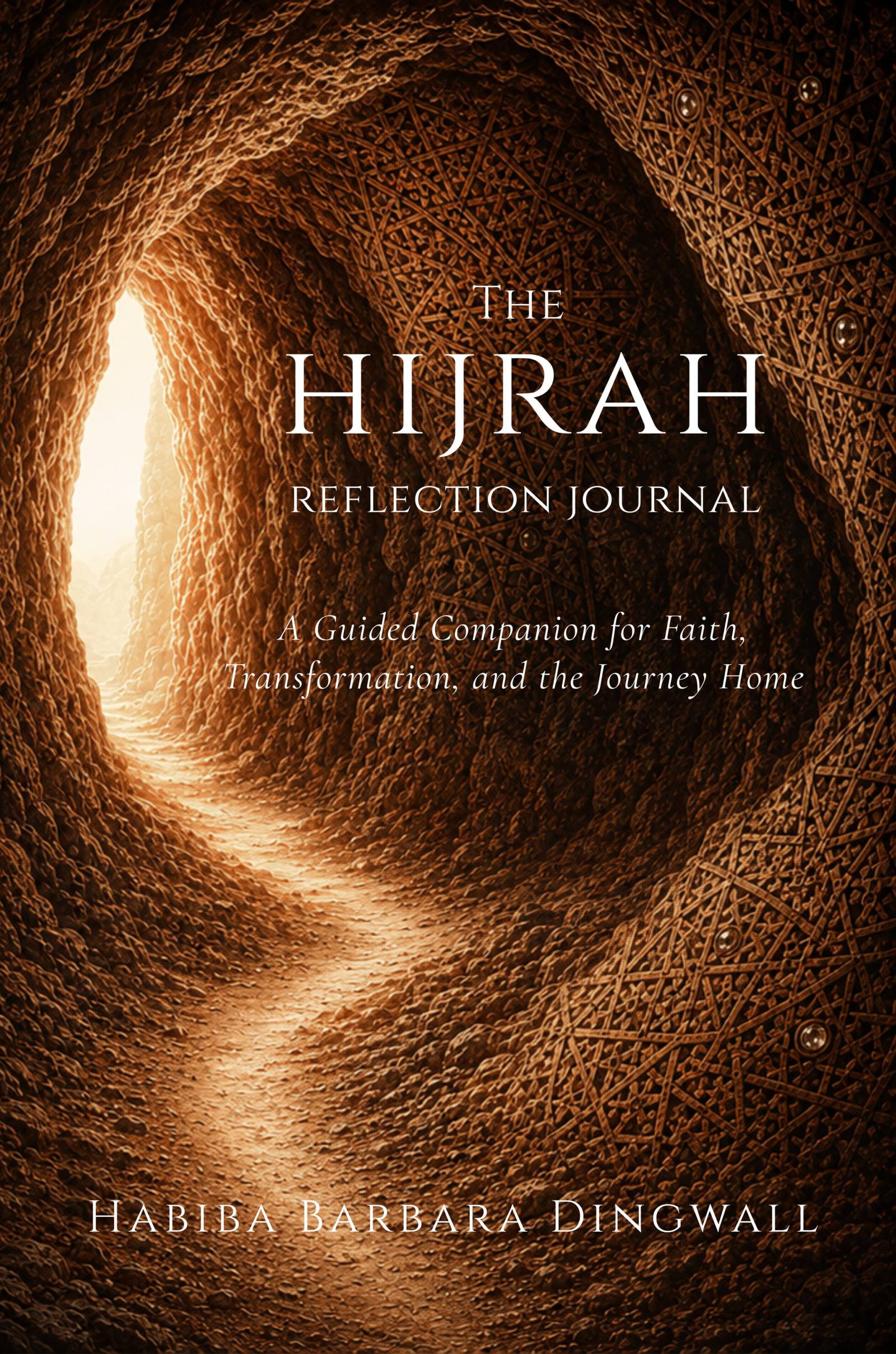
When I was developing The Hijrah Reflection Journal, I tried to write with a younger Muslim woman in mind, perhaps in her twenties, who knows the foundations of Islam but is searching for greater direction, steadiness, and meaning in her life.
Would the journal speak to her actual concerns? Would it feel relevant to the pressures and uncertainties she faces? Would it offer genuine guidance, or would it become another collection of attractive quotations and vague questions that leave the reader no clearer than before?
Looking at the journal through her eyes helped me understand both what it offers and why its tone matters.
A journal that does not speak down to the reader
One of the strongest impressions is that the journal feels calm, serious, and mature. It does not assume that a young woman is careless, spiritually weak, or in need of a lecture. Nor does it treat every struggle as evidence that she simply needs to pray more, try harder, or stop complaining.
Instead, it acknowledges that a person can sincerely believe in Allah and still feel uncertain. She may be carrying responsibilities that have become heavy. She may be trying to distinguish patience from passivity, fear from wisdom, or necessary change from the desire to escape discomfort.
The journal gives her room to examine these questions without condemning her for having them.
That matters because many young Muslims today are surrounded by advice. Some of it is thoughtful and rooted in faith. Some is simplistic, contradictory, or delivered with great confidence by people who know very little about the individual circumstances involved.
The Hijrah Reflection Journal does not add another commanding voice to that noise. It asks the reader to slow down, reflect honestly, seek Allah’s guidance, and pay careful attention to what is happening within and around her.
The idea of a personal hijrah
The historical Hijrah was the migration of Prophet Muhammad ﷺ and the early Muslims from Makkah to Madinah. It was a particular event with circumstances and significance that should not be reduced to a modern self-improvement slogan.
The journal respects that distinction.
At the same time, the Hijrah carries enduring lessons about leaving what harms faith, moving towards what strengthens it, trusting Allah without abandoning practical effort, and building surroundings in which goodness can grow.
For a young woman, a personal hijrah might involve leaving behind a destructive habit, an unhealthy way of thinking, a social environment that steadily weakens her, or a pattern of living that no longer reflects what she believes.
But it does not automatically mean walking away from a place, marriage, family relationship, job, or responsibility.
Sometimes the right movement is outward. At other times, it is inward. It may require patience, repair, clearer boundaries, consultation, appropriate help, or the courage to remain and act differently.
The journal tries to create enough space for that discernment.
Feeling understood without being encouraged to act impulsively
Sections such as What Feels Heavy, Faith Under Pressure, and The Voices I Need to Stop Obeying may feel particularly relevant to younger women.
Many are carrying expectations from several directions at once: family, community, work, social media, religious culture, and their own ideas about the life they thought they would have by now. They may feel behind, divided, or unsure which inner voice deserves to be trusted.
The journal allows the reader to name what feels heavy without immediately telling her to remove it from her life. Not every difficulty is proof that something is wrong. Some difficulties teach, strengthen, discipline, or reveal what still needs to grow.
At the same time, endurance should not be used to justify everything. There are situations in which repair is required, boundaries must be established, counsel should be sought, or harm must be taken seriously.
The intention is neither to push the reader towards leaving nor to persuade her to remain at all costs. It is to help her look more clearly.
Trust in Allah that includes effort
One of the central themes of the journal is tawakkul: reliance upon Allah.
Yet reliance is not presented as passively waiting for circumstances to change. The Hijrah itself involved careful preparation, trustworthy companions, secrecy, timing, knowledge of the route, and the hiring of a capable guide.
Trust in Allah and responsible action are not opposites.
For a young reader who may be trying to make decisions about education, work, marriage, family, faith, or the direction of her life, this is an important lesson. She does not have to know the whole road before taking the next responsible step. But she should think, plan, consult, pray, and act with attention.
The journal’s sections on waiting, planning, companionship, and effort encourage this balance.
The people who help us remain steady
Another strength of the journal is its attention to companionship.
Personal growth is often presented today as a solitary project. We are told to establish our own boundaries, pursue our own goals, protect our own peace, and become entirely responsible for our own healing.
Some of that language can be useful. But no one completes a meaningful spiritual journey entirely alone.
The Hijrah was supported by loyalty, courage, shared responsibility, practical service, and trust between people. The journal therefore asks the reader to consider who helps her stand firm, whose counsel deserves to be heard, and whether her present surroundings make goodness easier or harder to sustain.
It also asks a more uncomfortable question: what kind of companion is she becoming for others?
For a young woman searching for direction, this may be one of the most valuable parts of the journal. The aim is not merely to identify unsupportive people, but to recognise the relationships and communities that should be strengthened.
More than identifying the problem
How Might a Young Muslim Reader Experience The Hijrah Reflection Journal?
When I was developing The Hijrah Reflection Journal, I tried to write with a young Muslim reader in mind, perhaps someone in their twenties who knows the foundations of Islam but is searching for greater direction, steadiness, and meaning in life.
Would the journal speak to their actual concerns? Would it feel relevant to the pressures and uncertainties they face? Would it offer genuine guidance, or would it become another collection of attractive quotations and vague questions that leave the reader no clearer than before?
Looking at the journal through the eyes of such a reader helped me understand both what it offers and why its tone matters.
A journal that does not speak down to the reader
One of the strongest impressions is that the journal feels calm, serious, and mature. It does not assume that a young person is careless, spiritually weak, or in need of a lecture. Nor does it treat every struggle as evidence that they simply need to pray more, try harder, or stop complaining.
Instead, it acknowledges that a person can sincerely believe in Allah and still feel uncertain. They may be carrying responsibilities that have become heavy. They may be trying to distinguish patience from passivity, fear from wisdom, or necessary change from the desire to escape discomfort.
The journal gives the reader room to examine these questions without condemning them for having them.
That matters because many young Muslims today are surrounded by advice. Some of it is thoughtful and rooted in faith. Some is simplistic, contradictory, or delivered with great confidence by people who know very little about the individual circumstances involved.
The Hijrah Reflection Journal does not add another commanding voice to that noise. It asks the reader to slow down, reflect honestly, seek Allah’s guidance, and pay careful attention to what is happening within and around them.
The idea of a personal hijrah
The historical Hijrah was the migration of Prophet Muhammad ﷺ and the early Muslims from Makkah to Madinah. It was a particular event with circumstances and significance that should not be reduced to a modern self-improvement slogan.
The journal respects that distinction.
At the same time, the Hijrah carries enduring lessons about leaving what harms faith, moving towards what strengthens it, trusting Allah without abandoning practical effort, and building surroundings in which goodness can grow.
For a young Muslim, a personal hijrah might involve leaving behind a destructive habit, an unhealthy way of thinking, a social environment that steadily weakens them, or a pattern of living that no longer reflects what they believe.
But it does not automatically mean walking away from a place, marriage, family relationship, job, or responsibility.
Sometimes the right movement is outward. At other times, it is inward. It may require patience, repair, clearer boundaries, consultation, appropriate help, or the courage to remain and act differently.
The journal tries to create enough space for that discernment.
Feeling understood without being encouraged to act impulsively
Sections such as What Feels Heavy, Faith Under Pressure, and The Voices I Need to Stop Obeying may feel particularly relevant to younger Muslims.
Many are carrying expectations from several directions at once: family, community, work, social media, religious culture, and their own ideas about the life they thought they would have by now. They may feel behind, divided, or unsure which inner voice deserves to be trusted.
The journal allows the reader to name what feels heavy without immediately telling them to remove it from their life. Not every difficulty is proof that something is wrong. Some difficulties teach, strengthen, discipline, or reveal what still needs to grow.
At the same time, endurance should not be used to justify everything. There are situations in which repair is required, boundaries must be established, counsel should be sought, or harm must be taken seriously.
The intention is neither to push the reader towards leaving nor to persuade them to remain at all costs. It is to help them look more clearly.
Trust in Allah that includes effort
One of the central themes of the journal is tawakkul: reliance upon Allah.
Yet reliance is not presented as passively waiting for circumstances to change. The Hijrah itself involved careful preparation, trustworthy companions, secrecy, timing, knowledge of the route, and the hiring of a capable guide.
Trust in Allah and responsible action are not opposites.
For a young reader who may be trying to make decisions about education, work, marriage, family, faith, or the direction of their life, this is an important lesson. They do not have to know the whole road before taking the next responsible step. But they should think, plan, consult, pray, and act with attention.
The journal’s sections on waiting, planning, companionship, and effort encourage this balance.
The people who help us remain steady
Another strength of the journal is its attention to companionship.
Personal growth is often presented today as a solitary project. We are told to establish our own boundaries, pursue our own goals, protect our own peace, and become entirely responsible for our own healing.
Some of that language can be useful. But no one completes a meaningful spiritual journey entirely alone.
The Hijrah was supported by loyalty, courage, shared responsibility, practical service, and trust between people. The journal therefore asks the reader to consider who helps them stand firm, whose counsel deserves to be heard, and whether their present surroundings make goodness easier or harder to sustain.
It also asks a more uncomfortable question: what kind of companion are they becoming for others?
For a young Muslim searching for direction, this may be one of the most valuable parts of the journal. The aim is not merely to identify unsupportive people, but to recognise the relationships and communities that should be strengthened.
More than identifying the problem
Reflection can become repetitive if it never leads anywhere. A person may fill pages describing their fears, disappointments, and patterns without becoming any clearer about what they should do next.
That was an important concern in reviewing the journal from a younger reader’s perspective. Broad questions can feel meaningful at first but frustrating if they remain abstract. A reader may understand what is wrong yet still need help translating that recognition into Islamic and practical direction.
For this reason, the journal gradually moves from reflection towards action.
The later sections ask the reader to consider what they want to move towards, what support they need, what responsibilities must be faced, and what realistic next steps they can take. The Personal Hijrah Plan and the 40-day practice are intended to help them carry insight into daily life.
The goal is not a dramatic reinvention of the self. It is a more attentive way of moving forward.
A safe place, but not an empty one
Perhaps the clearest impression is that the journal feels emotionally safe without becoming spiritually empty.
It does not shame the reader, rush them, or tell them that every difficult feeling represents weak faith. But neither does it present reflection as merely listening to oneself. The reader is repeatedly brought back to Allah, prayer, responsibility, consultation, trustworthy guidance, and the example of the Hijrah.
A young Muslim might feel that the journal understands something of the tension they live with: the desire to trust Allah while still wanting clarity, the need to honour responsibilities without losing themselves, and the hope that life can change without every change needing to be sudden or dramatic.
They may also find that the journal does not give them a ready-made answer to every question.
That is deliberate.
A journal cannot know the details of a reader’s life, and it should not pretend to replace sound religious knowledge, wise counsel, professional help where needed, or sincere consultation with people who understand their circumstances.
What it can do is help the reader ask better questions, recognise what deserves attention, and approach decisions with greater honesty and reverence for Allah.
Who is the journal for?
The Hijrah Reflection Journal is for anyone who feels that some part of life needs to be reconsidered, repaired, released, or redirected.
It may be especially meaningful for younger Muslims who are trying to build an adult life while remaining rooted in faith. But it is not limited to one age or stage. The need to leave behind what distances us from Allah, and to move towards what brings greater truth and steadiness, does not disappear as we grow older.
The journal can be used alongside The Hijrah: The Journey That Changed History, but it also stands on its own. Readers do not need extensive knowledge of Islamic history before beginning.
They need only a willingness to pause, to write honestly, and to consider where Allah may be asking them to grow.
A personal hijrah is not always a change of location. Sometimes it begins quietly, with clearer sight, a sincere intention, and one responsible step in the right direction.