
I was born in New Zealand and raised in Canada, in a background where I knew almost nothing about Islam.
When I became Muslim at the age of 22, I began reading and researching so that I could understand my new faith, its history, and the life of Prophet Muhammad ﷺ. That process of learning has never really stopped.
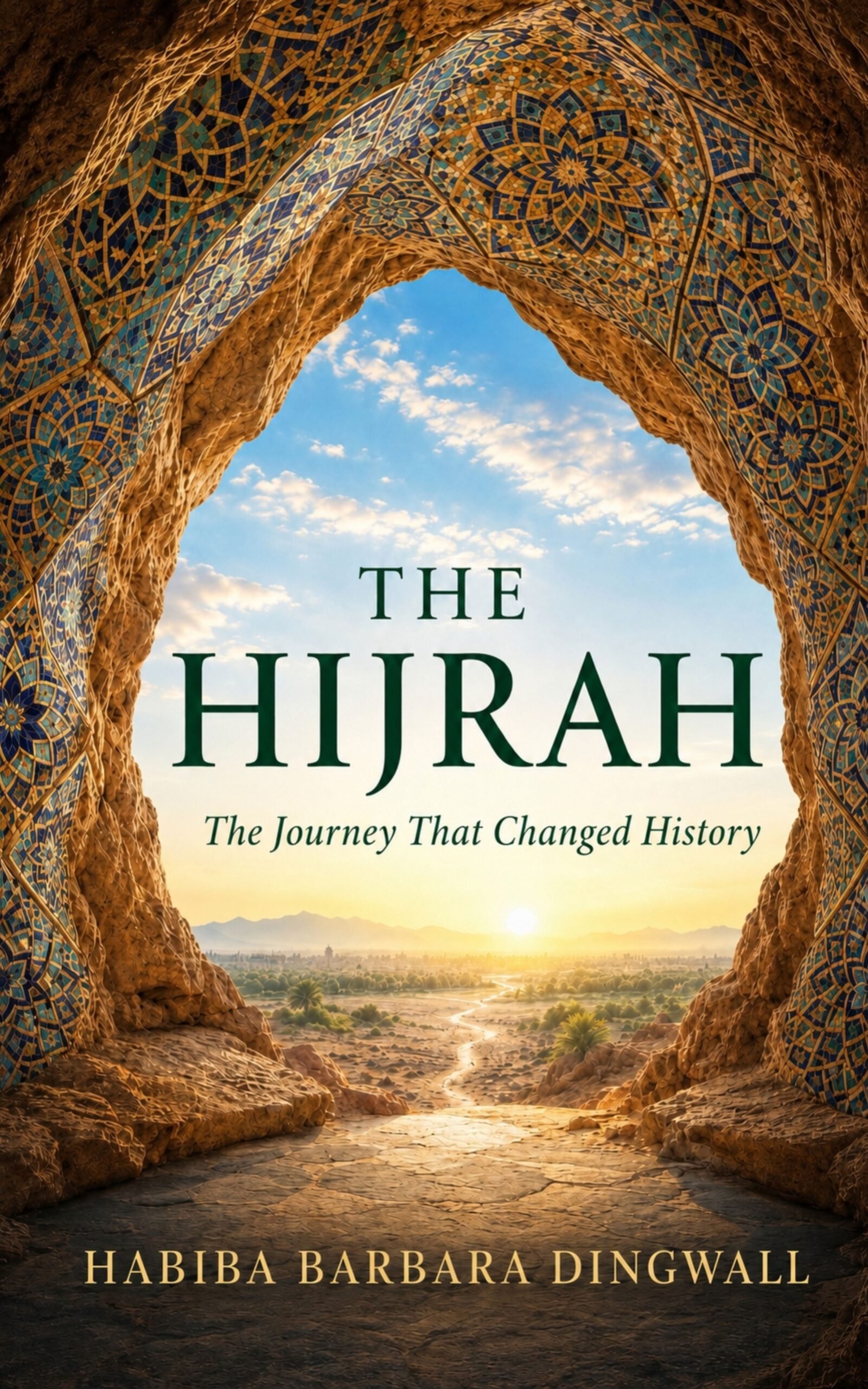
This coming Sunday, 2 August, I will turn 70. Looking back, I can see that The Hijrah: The Journey That Changed History is in many ways the fruit of almost five decades of study, reflection, and lived experience.
I was drawn to the Hijrah because it is one of the great turning points in history, yet it is often encountered through separate incidents rather than as one unfolding story. We may hear about the first revelation, the persecution of the early Muslims, the Cave of Thawr, the arrival in Madinah, or the Battle of Badr without always seeing clearly how these events connect.
I wanted to bring the entire period together in a continuous narrative, beginning with the first moments of Prophet Muhammad’s ﷺ mission, when he began receiving the Qur’an, and following the growing Muslim community through the difficult years in Makkah, the migration to Madinah, the building of a new society, and the events leading to the Battle of Badr.
As I studied the period, I came to see that the Hijrah was far greater than a journey from one city to another. It was a movement from vulnerability towards community, from persecution towards the freedom to practise faith openly, and from dependence upon familiar circumstances towards a deeper trust in God.
It is also a story of courage, sacrifice, friendship, careful planning, perseverance, and hope. These are not lessons confined to seventh-century Arabia. They speak to anyone who has had to leave something behind, face uncertainty, begin again, or place trust in God without being able to see the whole road ahead.
My own experience of discovering Islam without any previous knowledge strongly influenced the way I wrote the book. I remember what it was like to encounter unfamiliar names, places, customs, and ideas for the first time. For that reason, I wanted the history and cultural setting to be explained clearly, without assuming that the reader already knows the story.
I chose a narrative style because history becomes easier to understand when we can follow events as a connected human experience rather than as a collection of names and dates. I wanted readers to see the people involved, the choices they faced, the dangers they endured, and the relationships that helped sustain the emerging Muslim community.
My hope is that Muslim readers will gain a fuller understanding of events they may already know in part, while non-Muslim readers and those with no previous background in Islamic history will find a clear and welcoming introduction.
Islam and its history are often presented through fragments, stereotypes, and negative portrayals in the media and online. I hope that a carefully researched and human account of this period can help correct some of those misconceptions. The early Muslims were not distant figures moving through an abstract religious story. They were human beings facing fear, loss, uncertainty, loyalty, responsibility, and profound change.
The Hijrah: The Journey That Changed History is my first book, but I hope it will not be my last. I intend to continue writing about Islamic history, faith, and spiritual reflection, especially where the events of the past can illuminate questions that still matter today.
Above all, I hope this book helps readers see the Hijrah not only as an event that changed history, but as a story whose lessons still speak to the human heart.